SpotFind
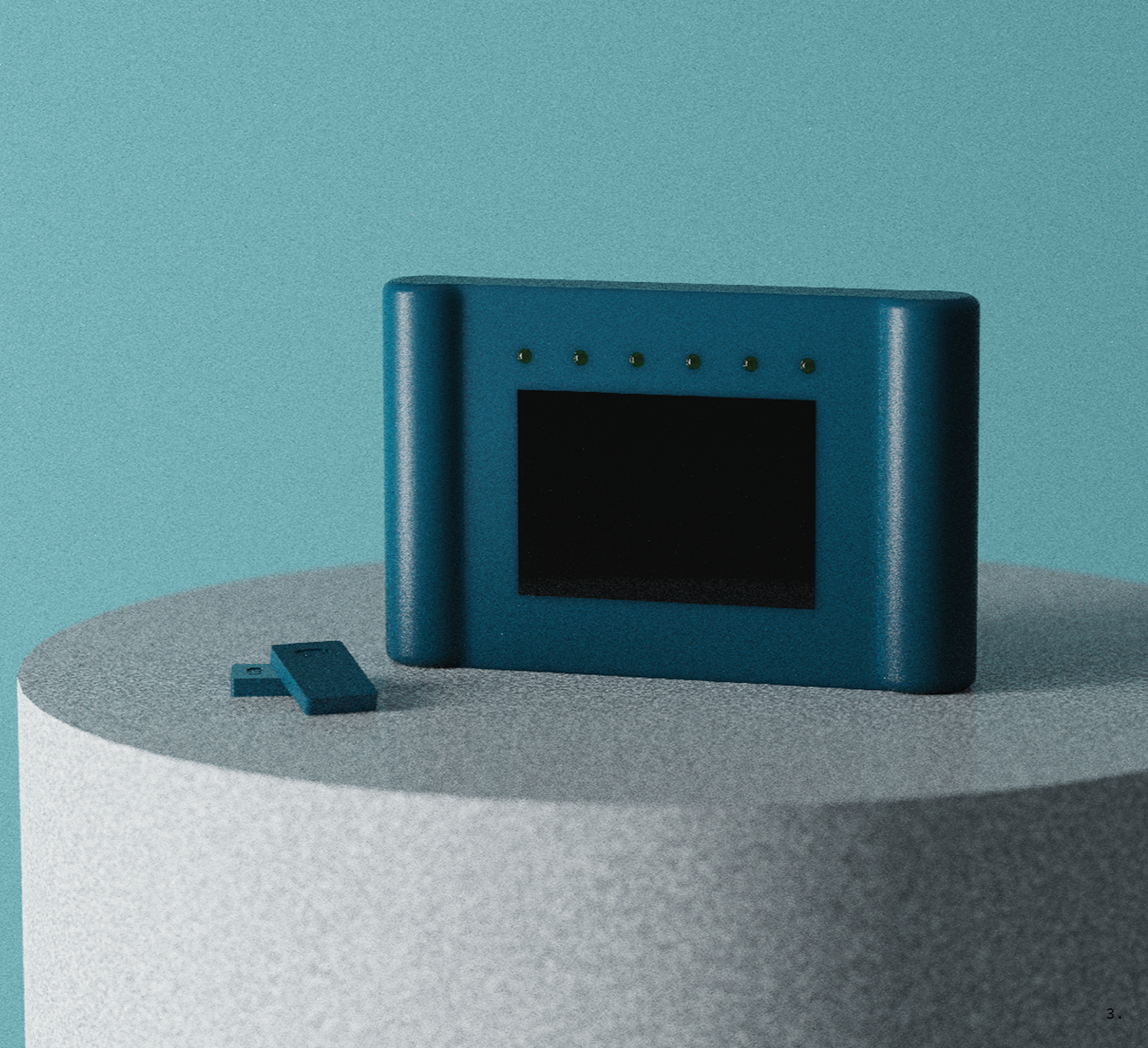
SpotFind is a smart tag-tracker designed to help carers keep track of core items. Focused on an underserved group, it alleviates the pain points they face around keeping a clean home while managing complex caregiving tasks.
Industrial Design | Human-centred Design
Arduino | SolidWorks | KeyShot
2024
Clemence Sulmont, Zyque So, Tharany Mathivannan
Project Type
Tools
Year
Collaborators
Problem
Carers often juggle multiple complex responsibilities and have limited time and energy. One of the main barriers is the constant disruption caused by misplaced essential items, which increases stress and makes maintaining a clean, organised home more difficult.
Solution
SpotFind makes it easier for carers to locate core items quickly, reducing time spent searching and preventing clutter from building up. This supports a more organised living environment and lowers the cognitive load associated with tidying.
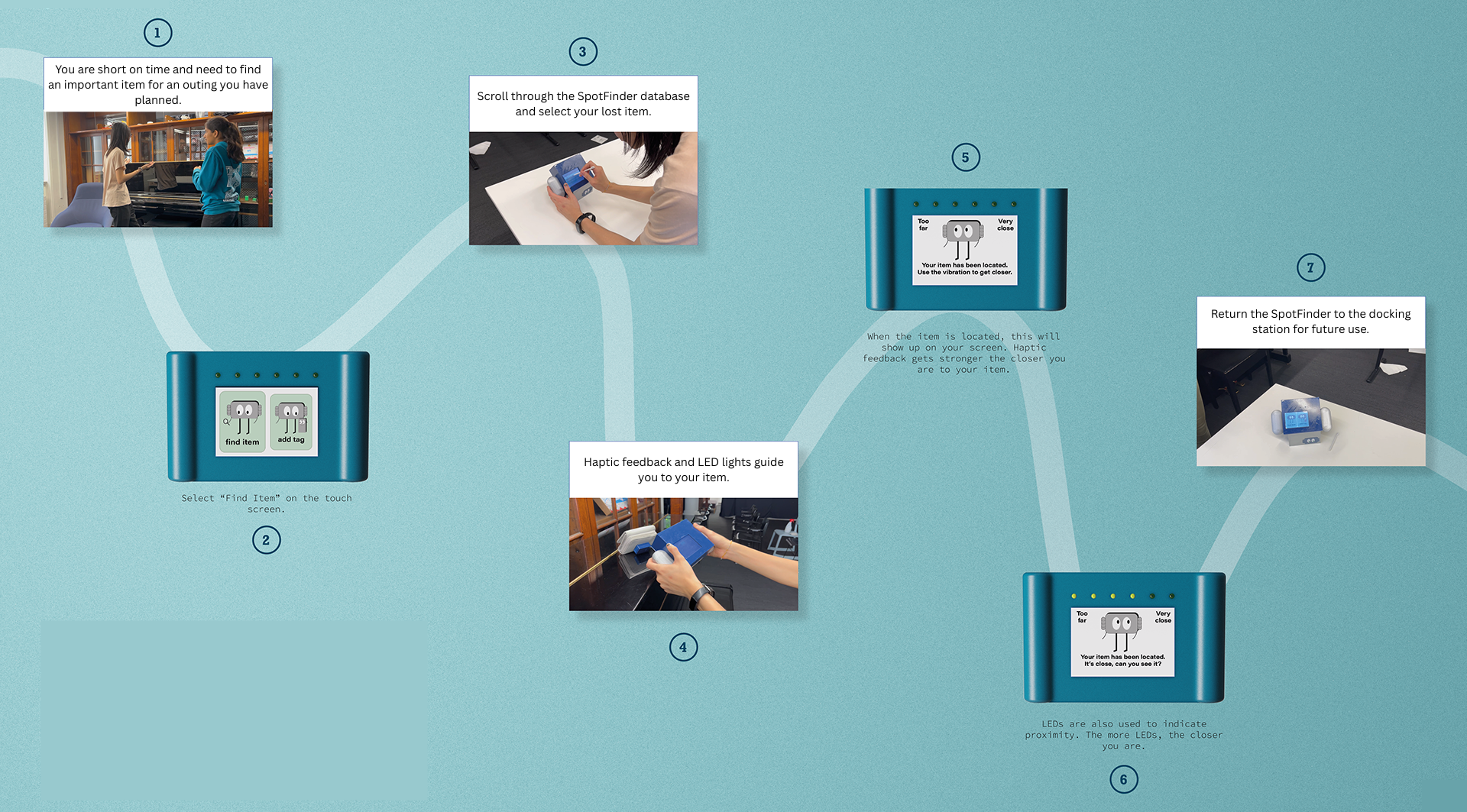
User Experience
The user’s journey with the tag-tracker shows how the product is used in the home.
Concept Ideation
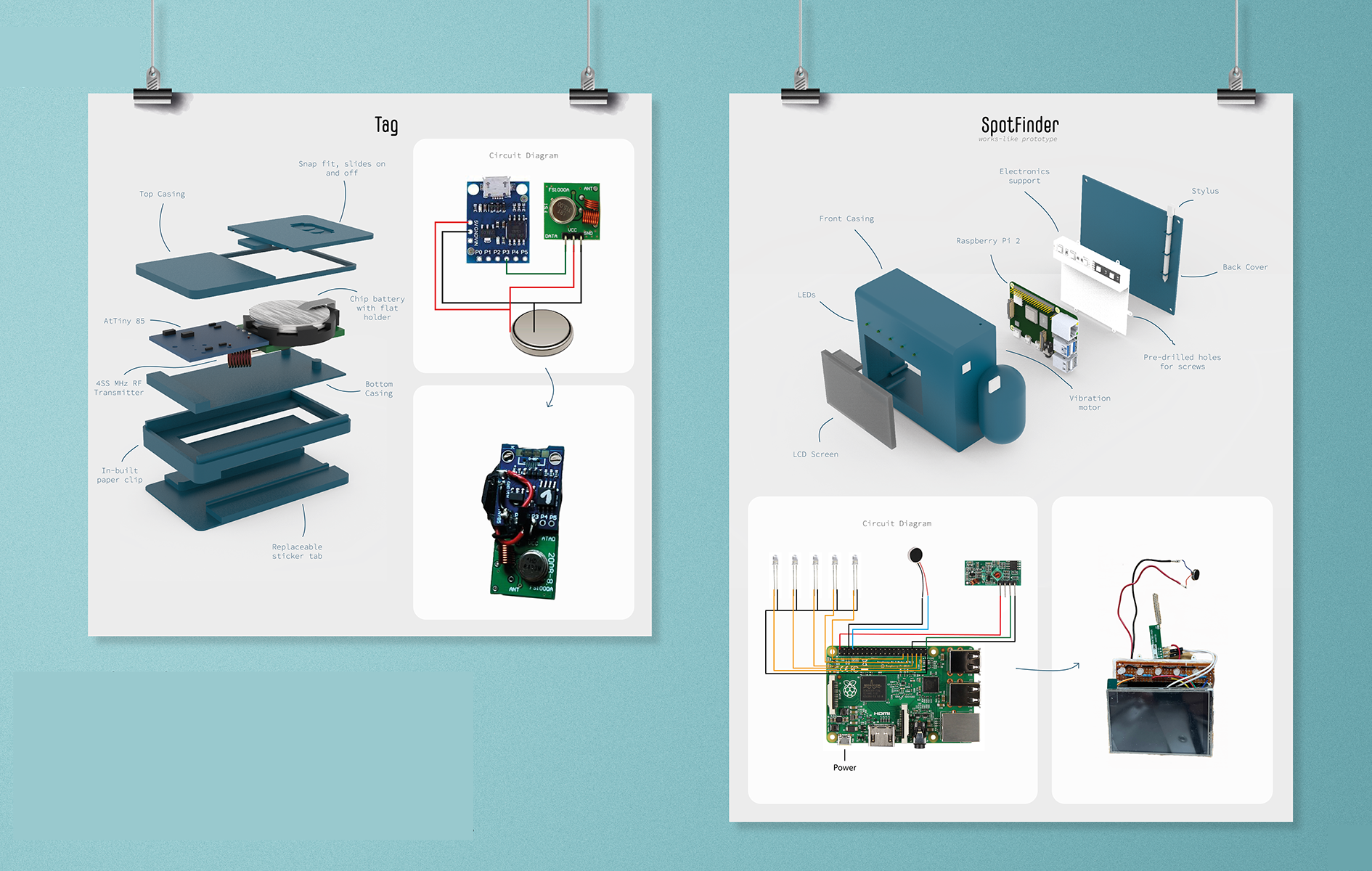
DFMA & Hardware
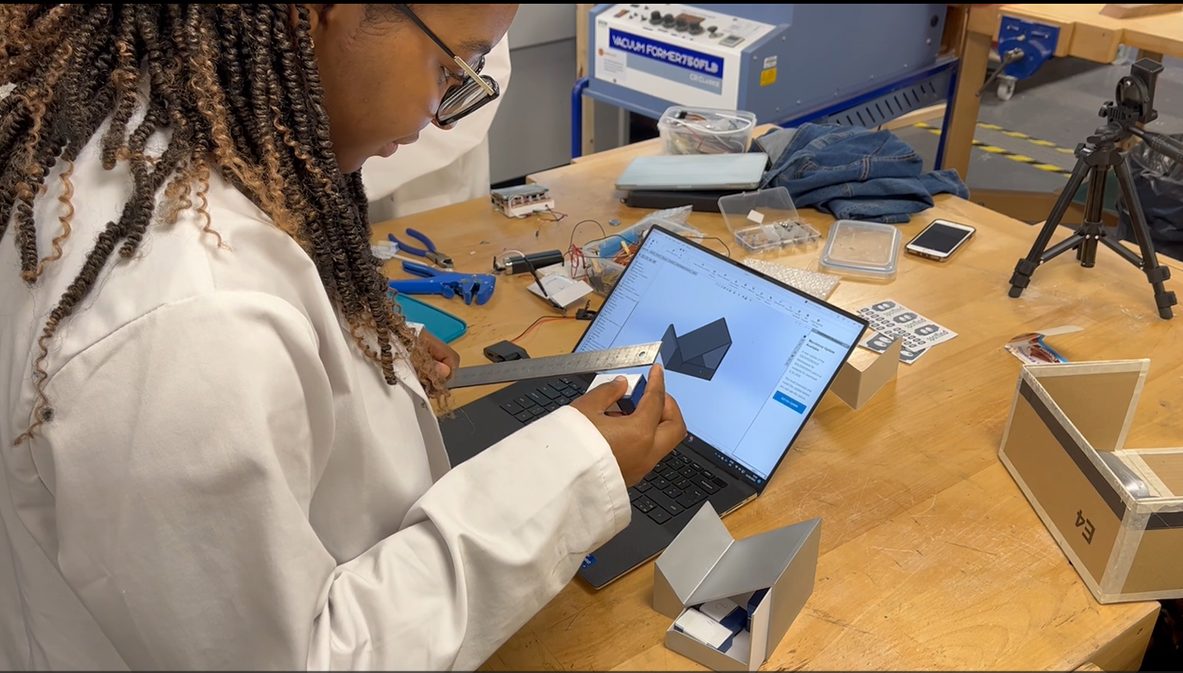
Each 3D printed component was designed to be easily assembled. Both Arduino & Raspberry Pi were implemented.
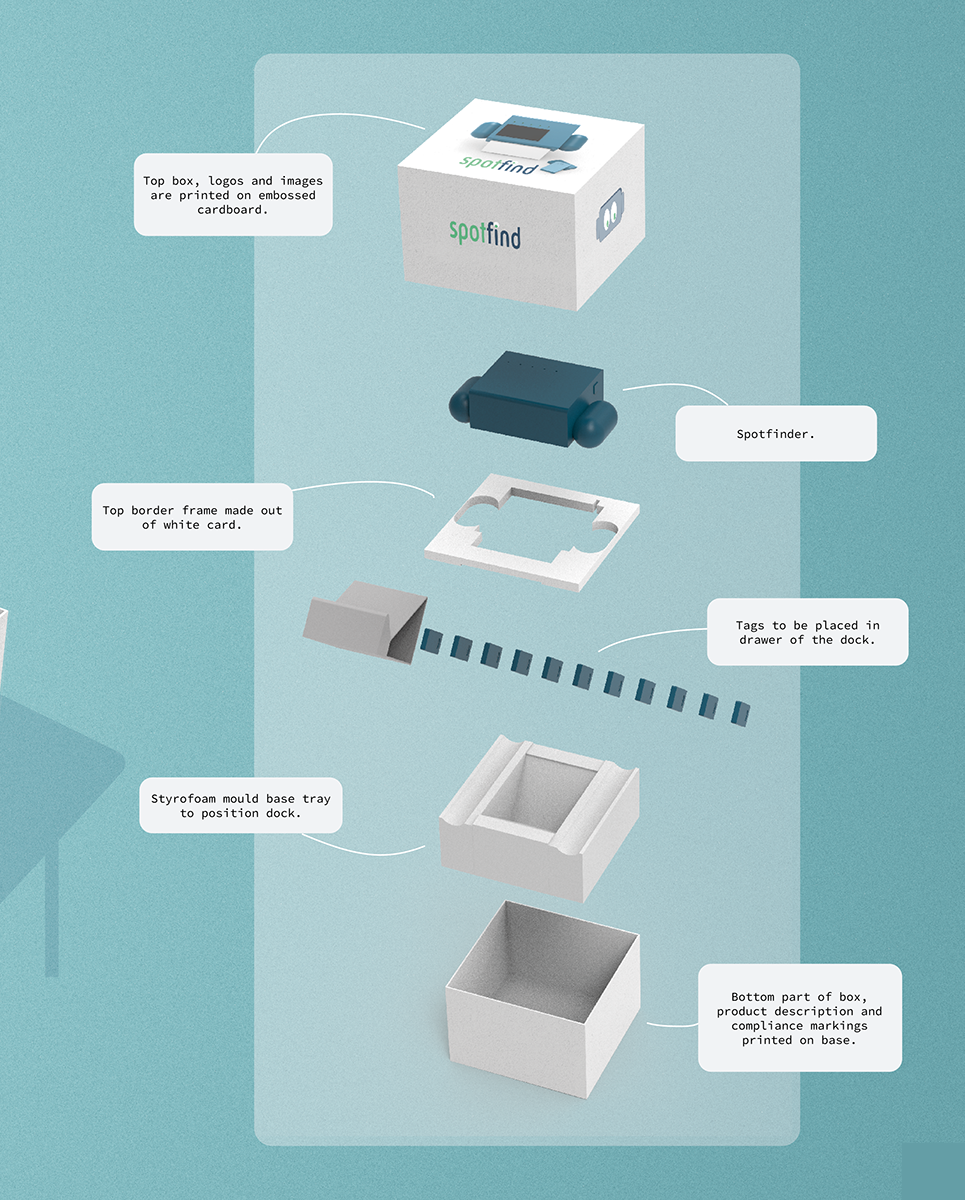
Packaging Design
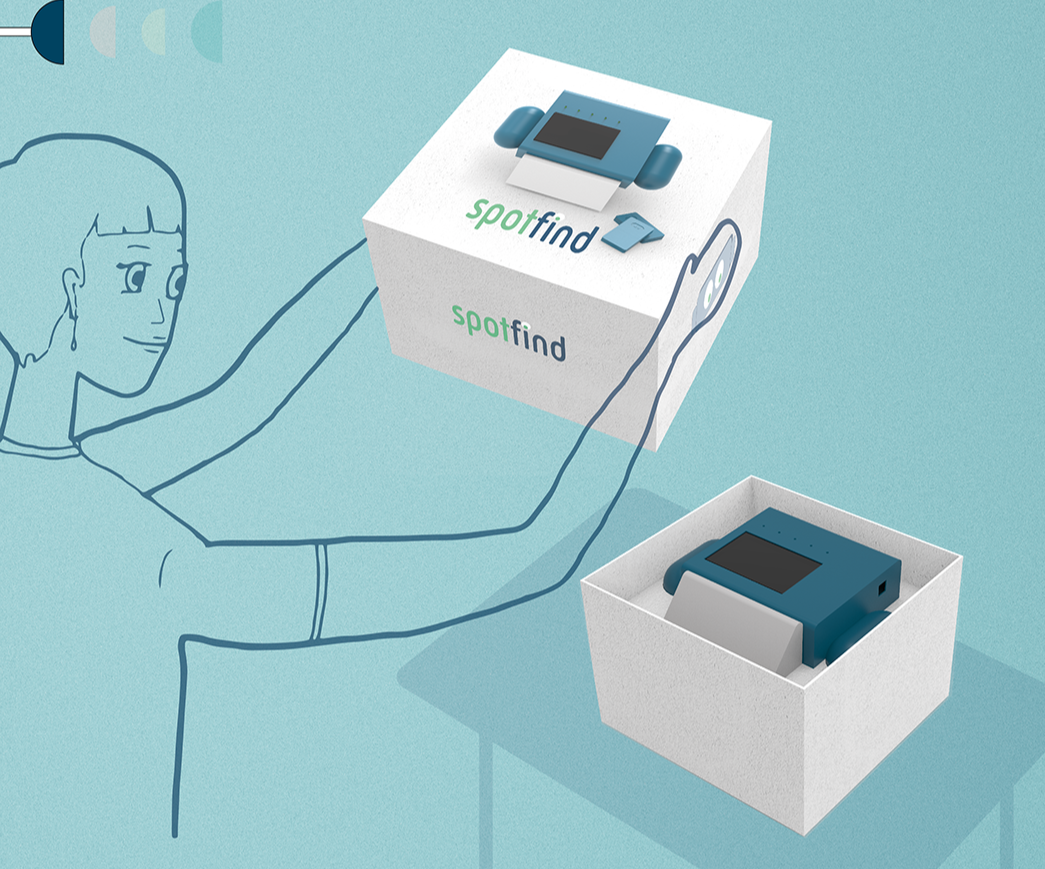
Packaging was designed to be appealing when on a shelf, clearly displaying the product as well as indicating its use. The structure highlights the SpotFinder device as the focal point from the moment of unboxing. A cardboard outer box with printed and embossed branding was chosen while internal moulded trays securely positioned the dock, tags, and components to reduce confusion during setup. Each element has a defined place, supporting an intuitive onboarding experience.
Preliminary Design
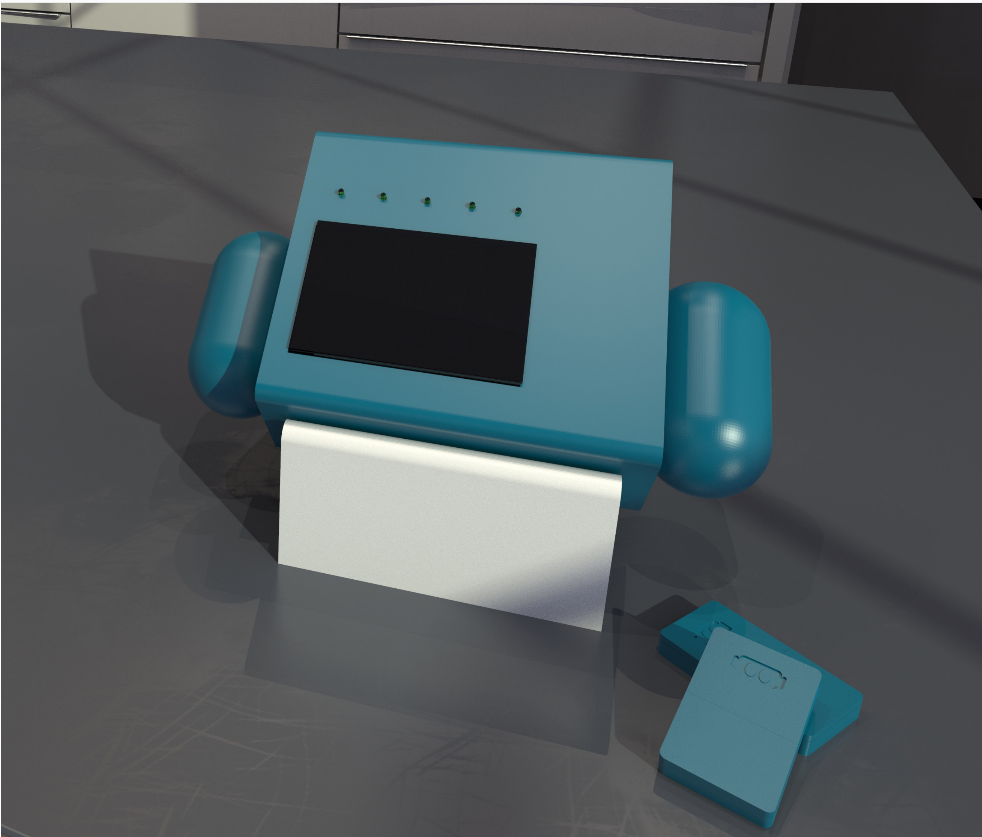
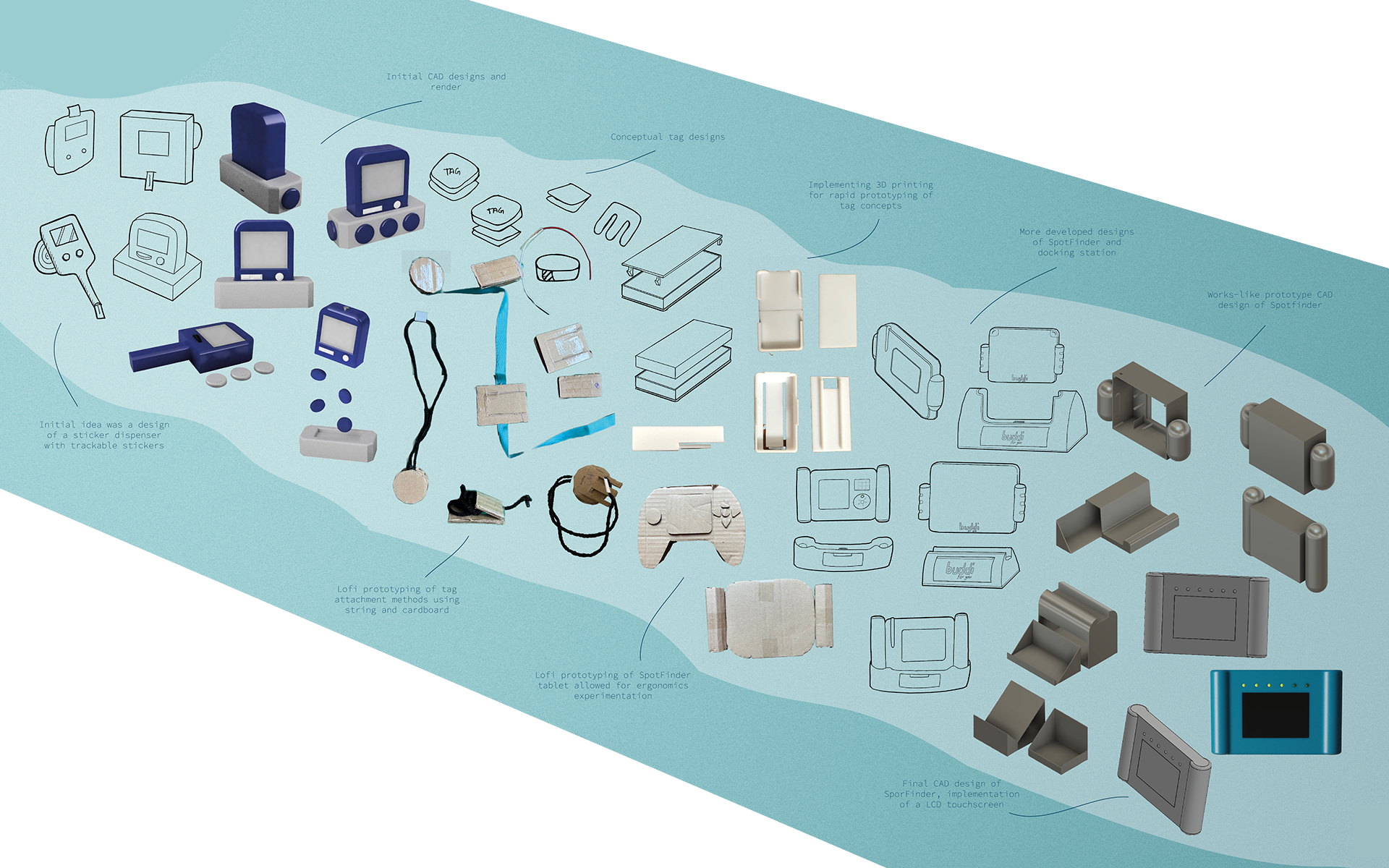
The preliminary design includes a tracking tablet, a stand that doubles as storage for the tags, and attachable tags.
Final Design
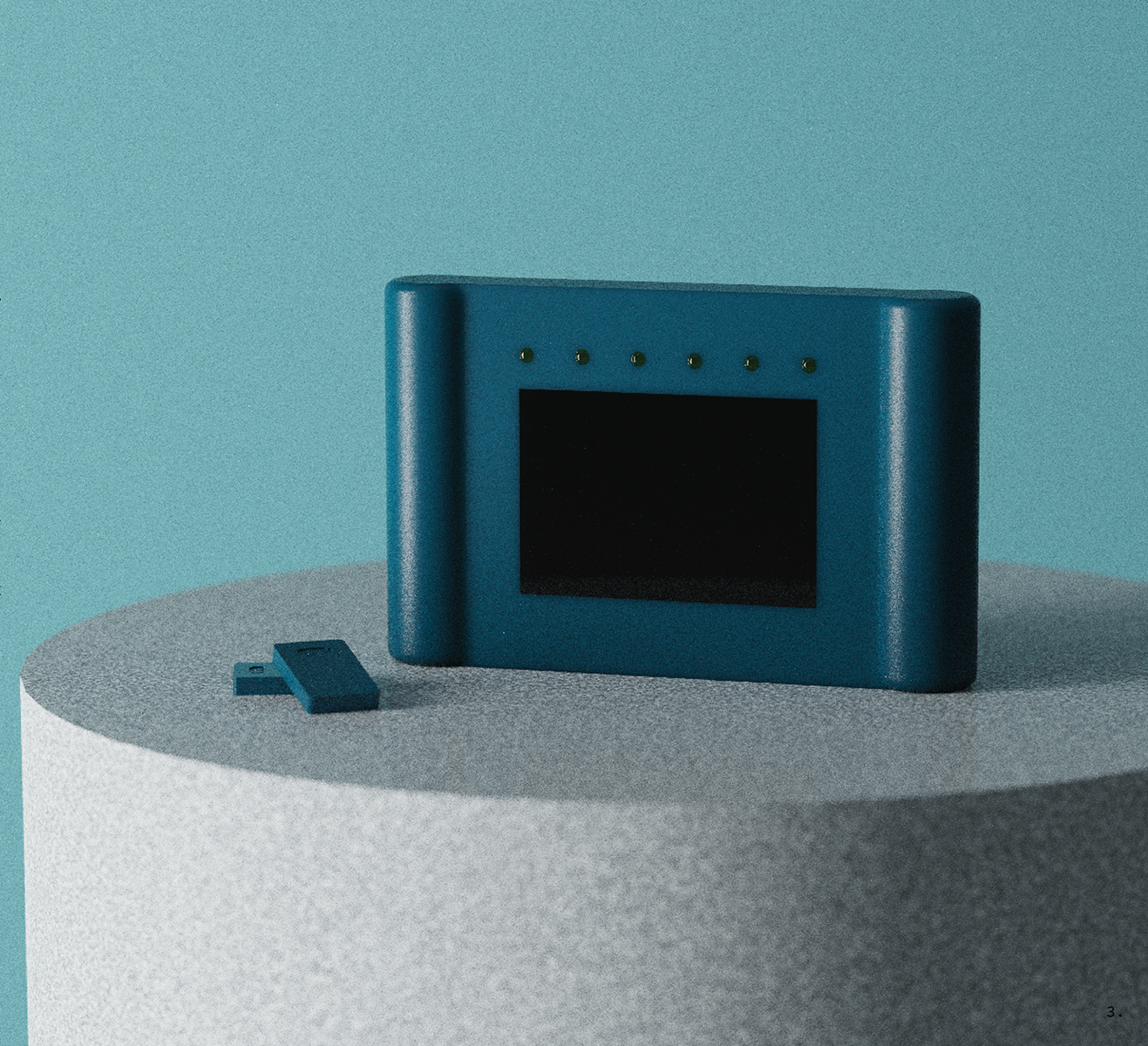
In the final design, the stand was removed as the packaging doubled as storage and the tablet was designed to stand on its own.
Key Takeaways & Conclusions
While the project is rooted in the needs of carers, the concept extends beyond this initial audience. SpotFind could also benefit senior citizens who may be less familiar with modern technology, as well as children who frequently misplace personal items. Future iterations will explore slimmer, more discreet tags to improve usability and integration into everyday objects. Additionally, transitioning from a radio-signal-based system to a Bluetooth-enabled solution — delivered as a mobile app or web application — would significantly increase accessibility and reduce the need for a dedicated tablet.
The next stage of the project is to test the works-like prototype with careers. By deploying the system in realistic home environments over several days, the project aims to gather valuable feedback on onboarding, ease of use, and frequency of interaction.