Privately Promoted

Privately Promoted is the advertising model of the future. In a 2043 scenario, where all data is private, and targeted advertisements cannot operate without the explicit authorization of the user, the internet is paywalled. Legislation such a the EU Data Act grants users full ownership over their data and access to the data generated by them. As a result, firms will need to gain consent from users for any use of their data, and all users' data can be exported to a universal machine-readable format.
Systems Design | Futures Design | Code
Python | Figma | User-centred Design
2023
Theo Bui, Max Matthews, Zyque So
Project Type
Tools
Year
Collaborators
Problem
Today’s web user-experience is dominated by advertisements. Resultantly, users are increasingly employing the use of privacy-enhancing technologies such as virtual private networks and ad blockers. This will lead to revenue from targeted advertisements becoming obsolete, resulting in heavily pay-walled online platforms. Additionally, future regulation will prohibit companies from selling and sharing your data without your explicit consent.
Solution
A software framework that enables advertisers to target users based on their preferences while adhering to new data privacy regulations. Advertisers pay users for engagement with their adverts as well as insight generators that contributed towards the advert selection. Insights are automatically filtered based on the privacy levels selected by users before sending a private, aggregated signature for selecting possible adverts to our servers in exchange for a batch of ads.
Stakeholder Analysis
In order to keep the internet accessible to all, a new advertising system is required to balance the needs of all stakeholders, particularly by giving individuals more control over their personal data. The requirements were determined from expert consultations.
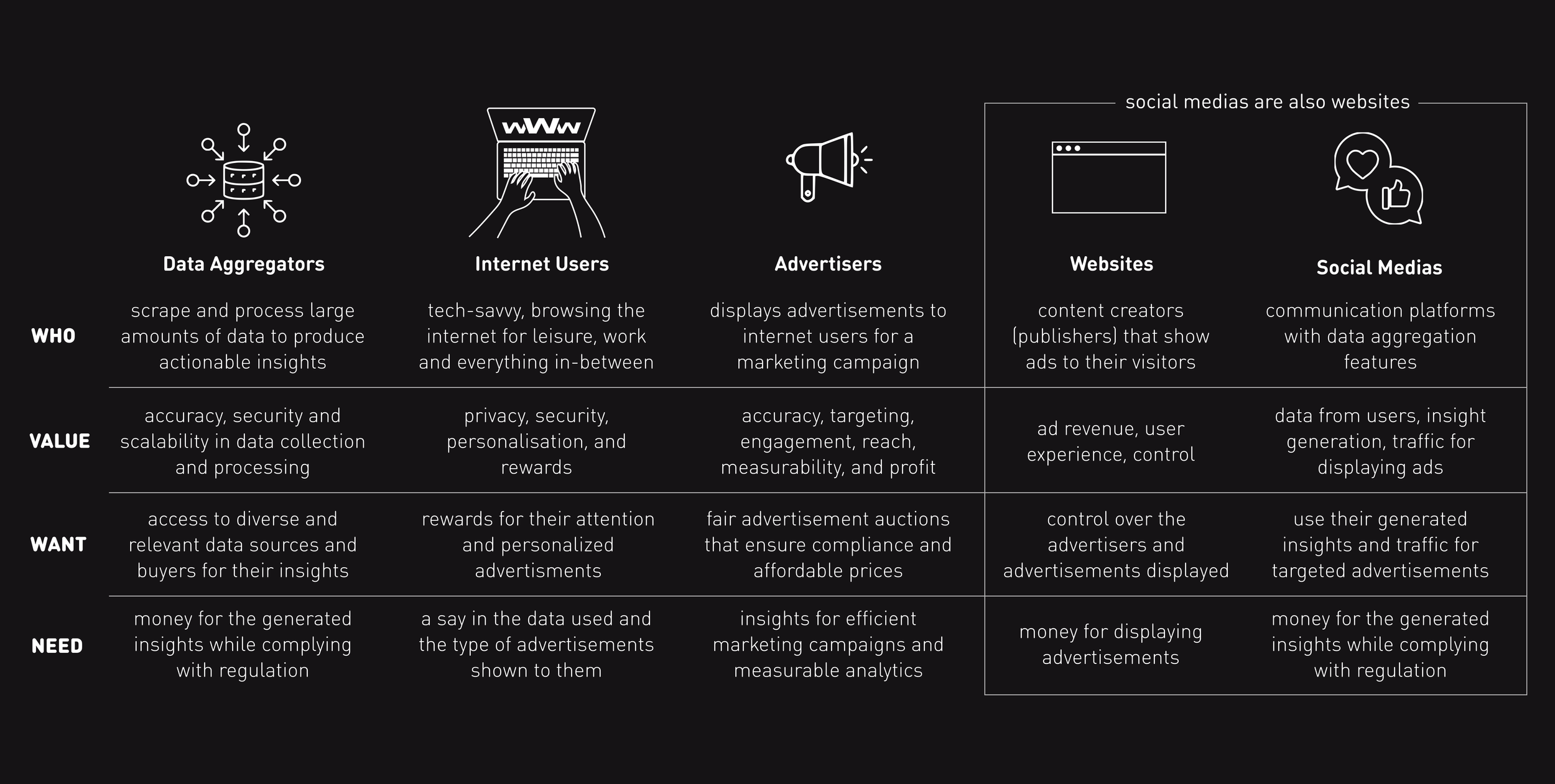
System Requirements

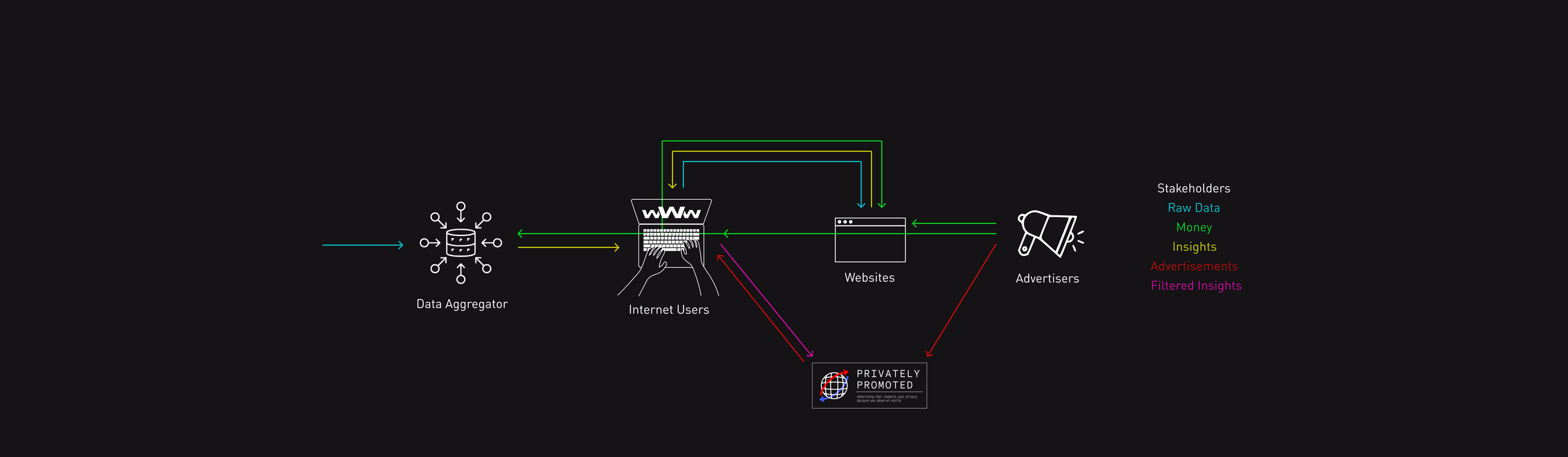
When a user interacts with a website, the generated data is sent to data aggregators that convert them in to insights for targeted advertisements. Throughout the system, user insights with varying specificity (for privacy) are exchanged between each stakeholder and Privately Promoted’s servers.
System Diagram
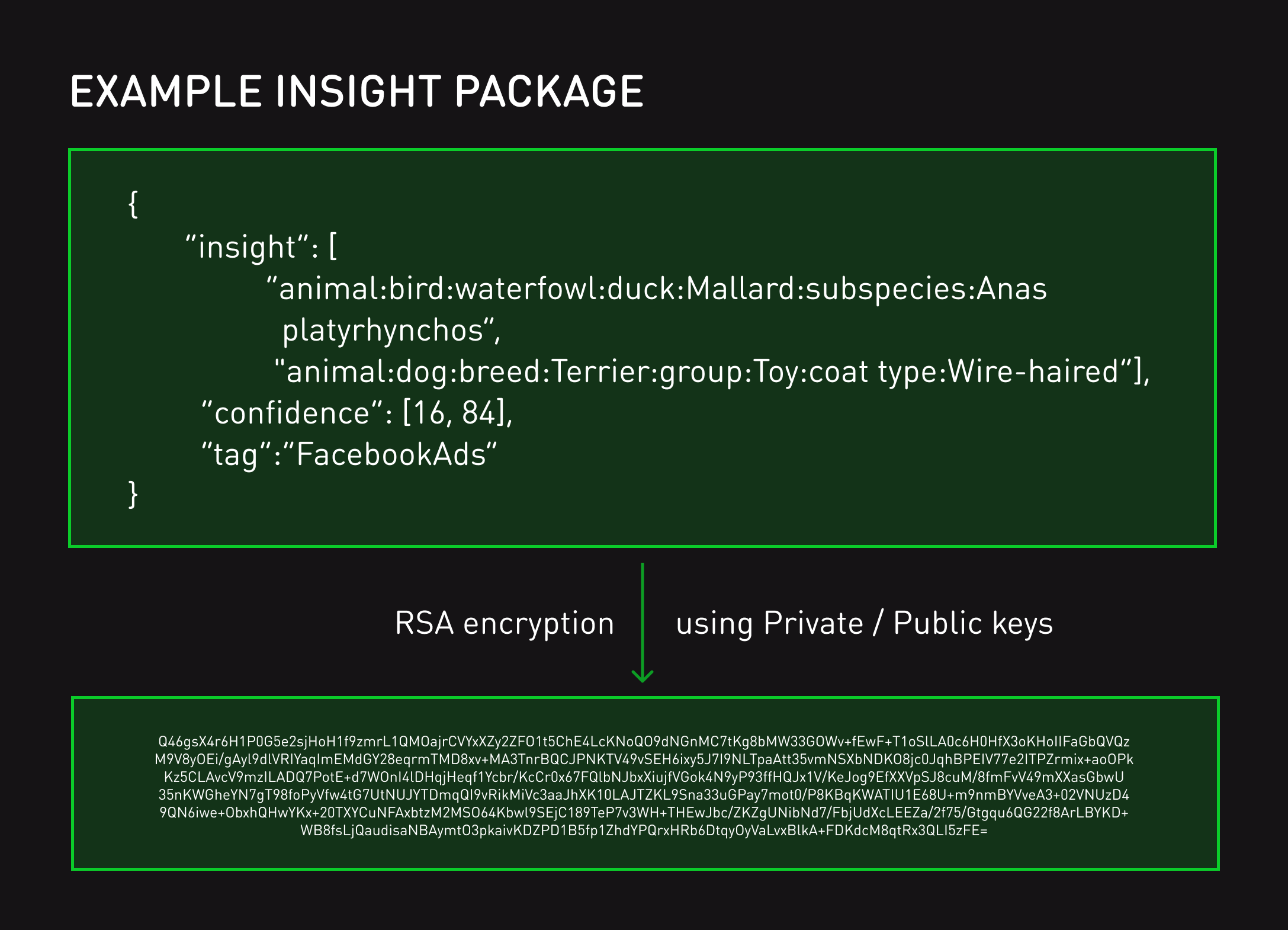
USER INSIGHT FORMAT
Insights have nested categories and values, enabling contributors to provide varying levels of information e.g. "animal:dog", "animal:dog:golden retrievers,chihuahua".
Insight
Each insight has a unique digital signature that enables it to be traced back to its source. This signature is used to facilitate payment when an ad is displayed.
Source Tag
Each insight has a confidence level that reflects its accuracy and reliability. These levels are considered during the ad selection process to determine the insights that are most likely to lead to user engagement and used to determine the distribution of rewards for each insight a generator contributed.
Confidence
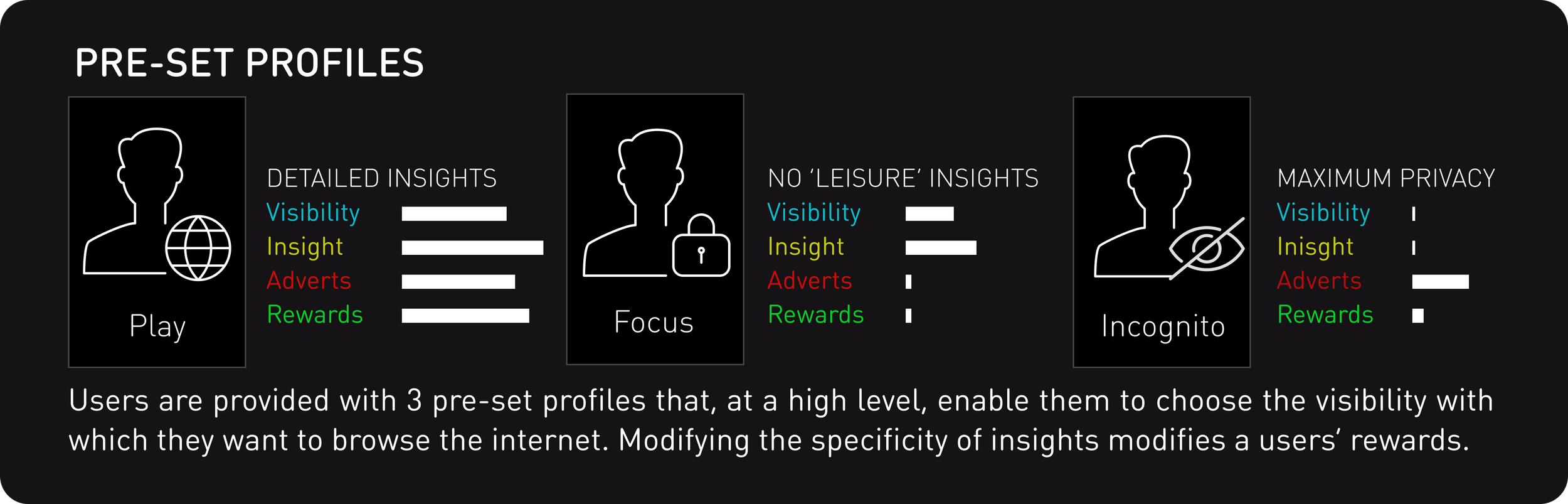
Privately Promoted prioritises user control and accessible data visibility. The Privately Promoted Framework automatically filters the generated insights based on the privacy levels selected by users before sending a private, aggregated signature for selecting possible adverts to our servers in exchange for a batch of ads.
UX DEVELOPMENT
User Control
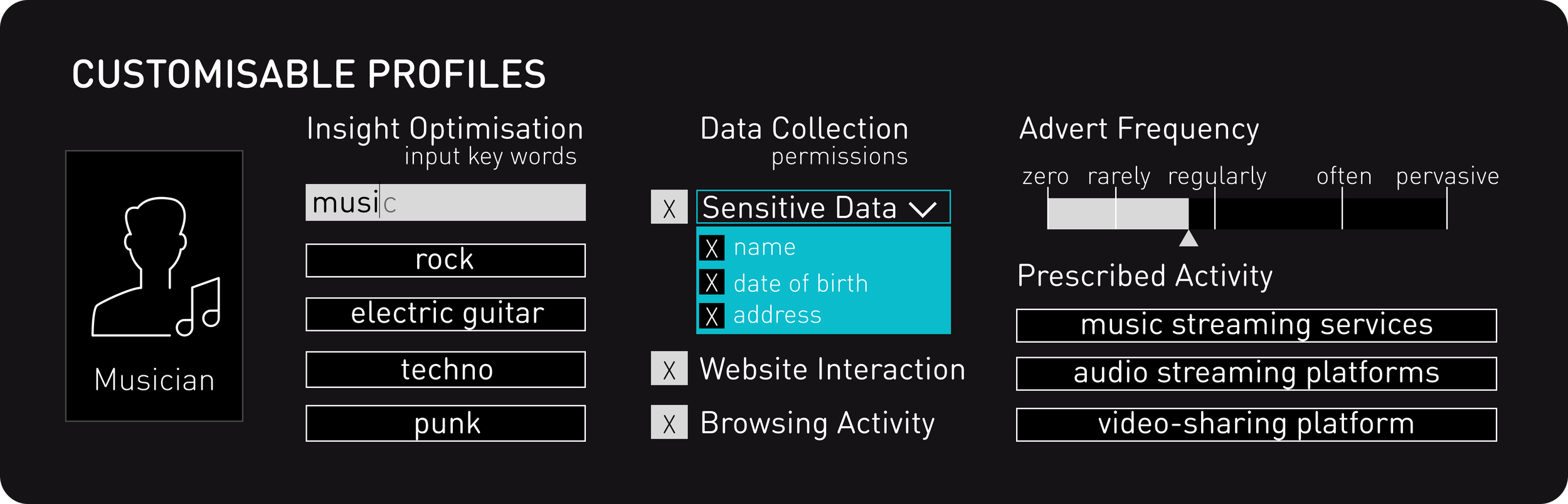
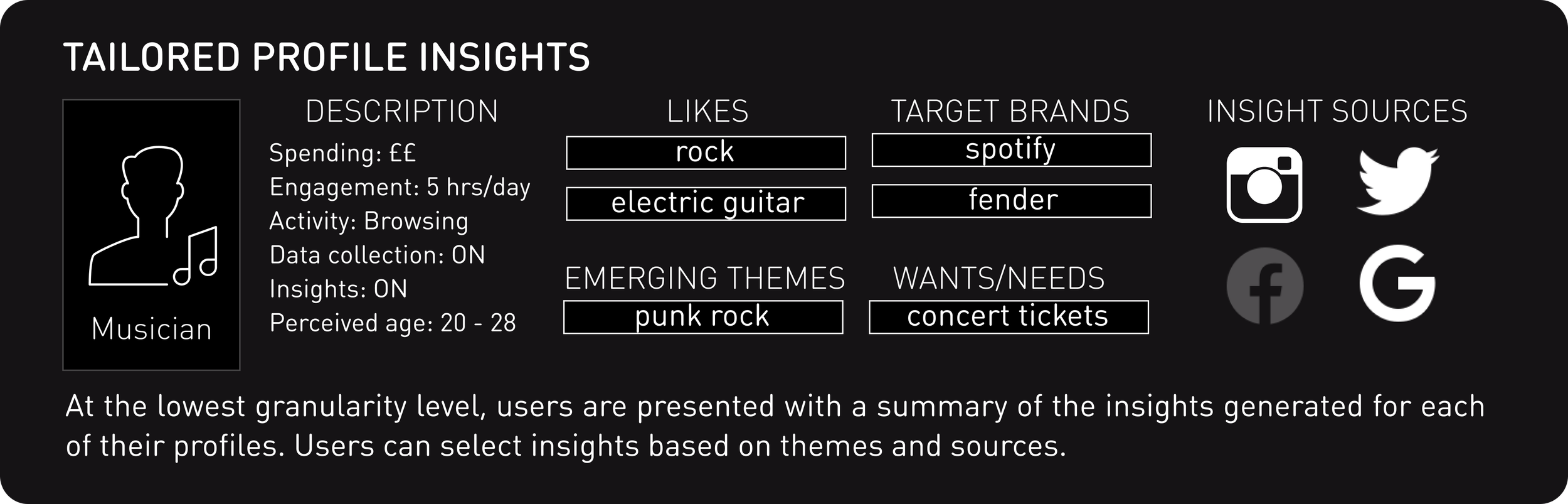
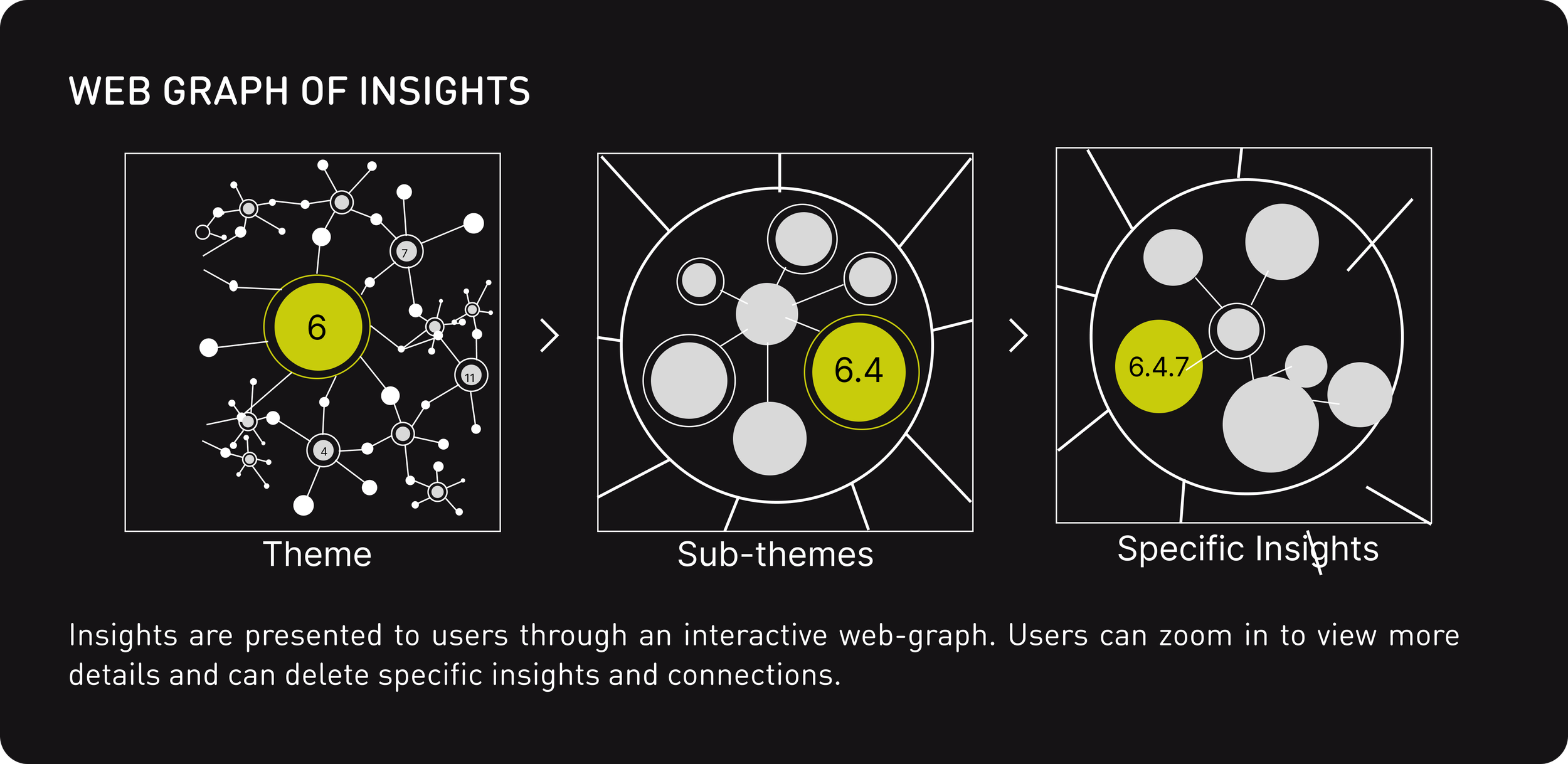
Accessible Data Visibility

MANAGING PAYMENTS
The payment model is crucial to Privately Promoted. It requires the transaction to be completed before a user loads a webpage. Following desk research and interviews, the following requirements were identified:
fully automated - requiring no (slow) human intervention
trusted - ensuring that every party is fairly compensated
private - complying with regulatory and individual demands
fee-less - limiting exorbitant cost in comparison with the low amounts transferred
PAY PER IMPRESSION (PPI): This payment model charges an advertiser for each impression every time an ad is displayed on a publisher’s content. Alternative methods include Pay Per Click or Action which could be taken advantage of if the user financially benefits from each transaction.
EXPERTS CONSULTED

Proof of Concept
We created a works-like prototype web-app demonstrating Privately Promoted’s system. It includes interfaces and actions for every stakeholder, validating key system elements such as the adjustable privacy features.
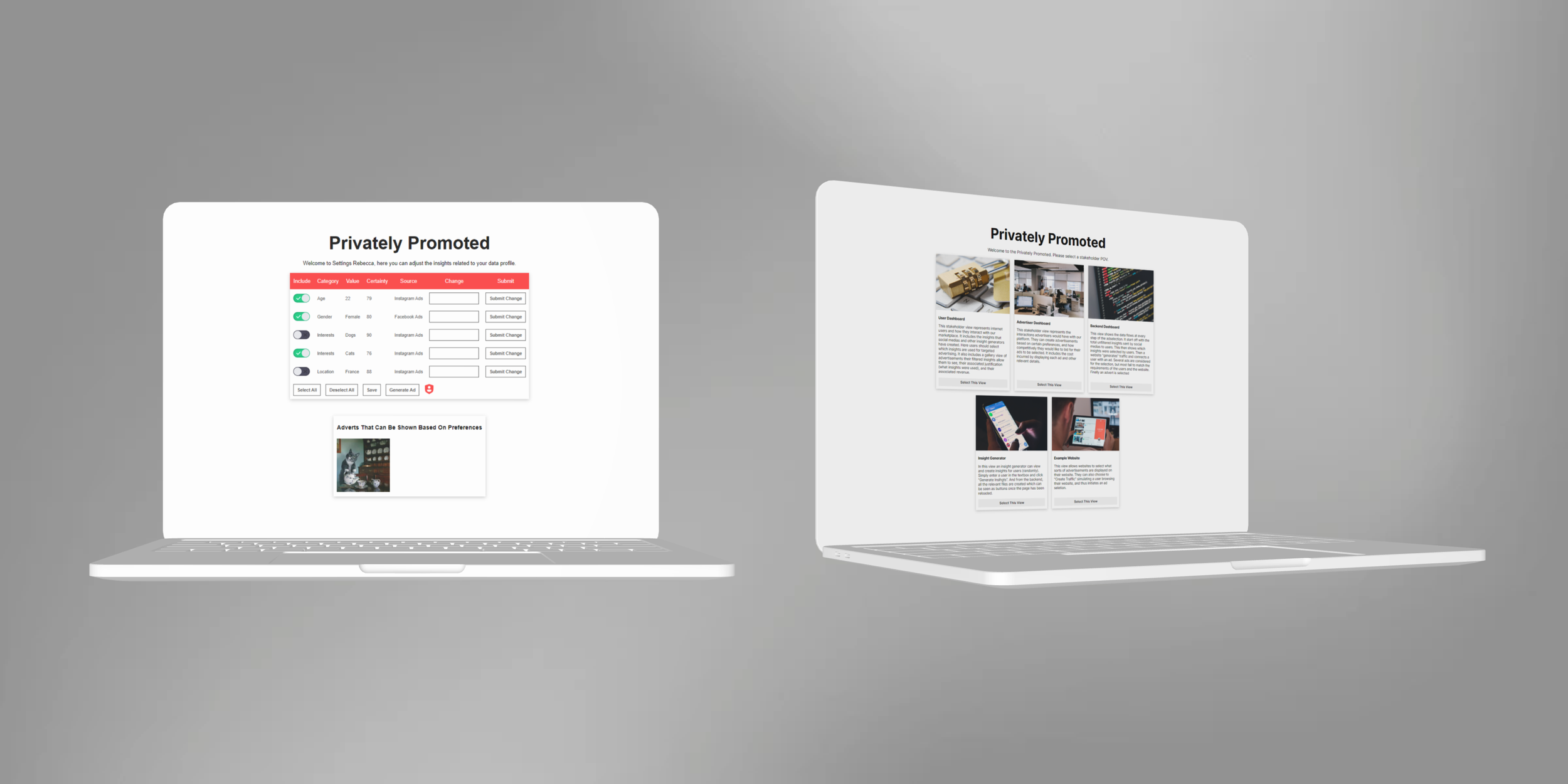
WEB APP FEATURES
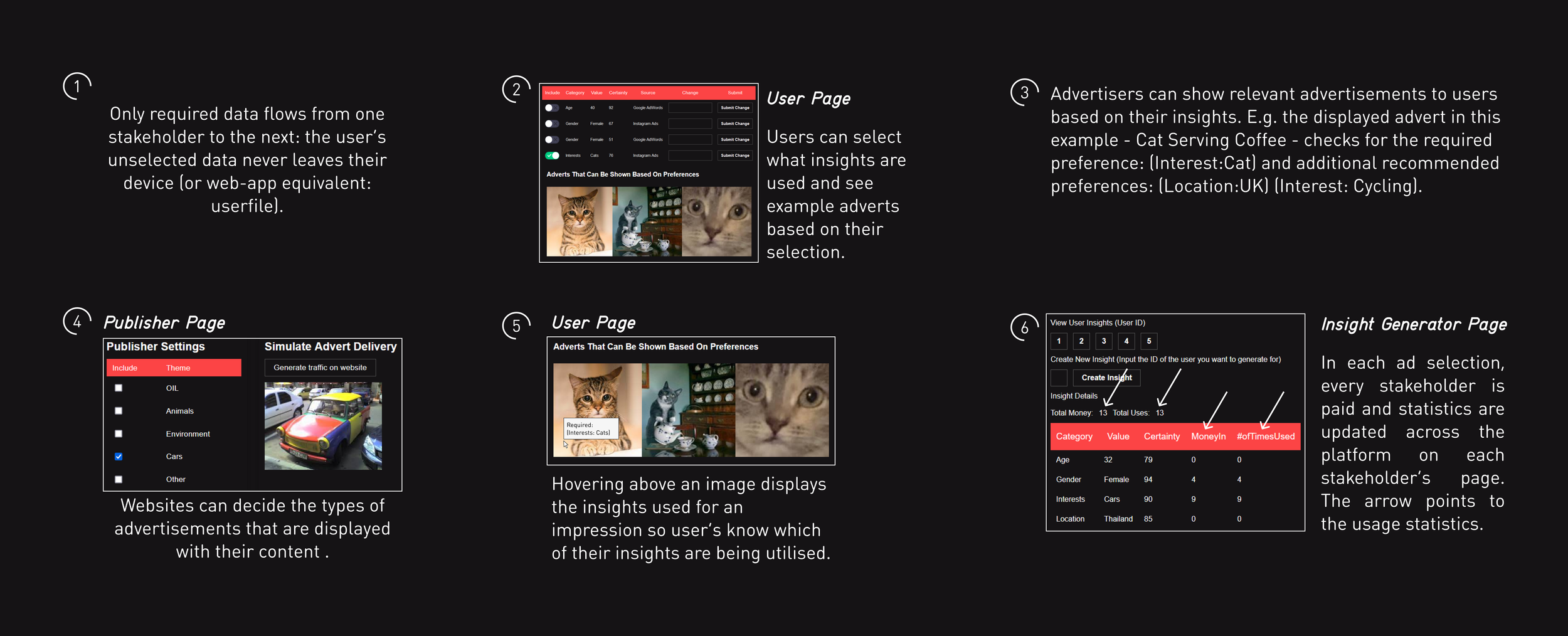
STAKEHOLDER VALIDATION WORKSHOP

Each participant was randomly assigned the role of either a user or an advertiser. Their tasks aimed to challenge the web-app’s limited functionality and encourage discussions about system elements noted in the feedback below. We focused on validating the most important elements: the displayed adverts’ correspondence to users’ preferences, enabling users to dynamically modify existing profiles and allowing the data to flow as intended.
All participants found the system ideal for the presented future scenario but still provided some opportunities for improvement.
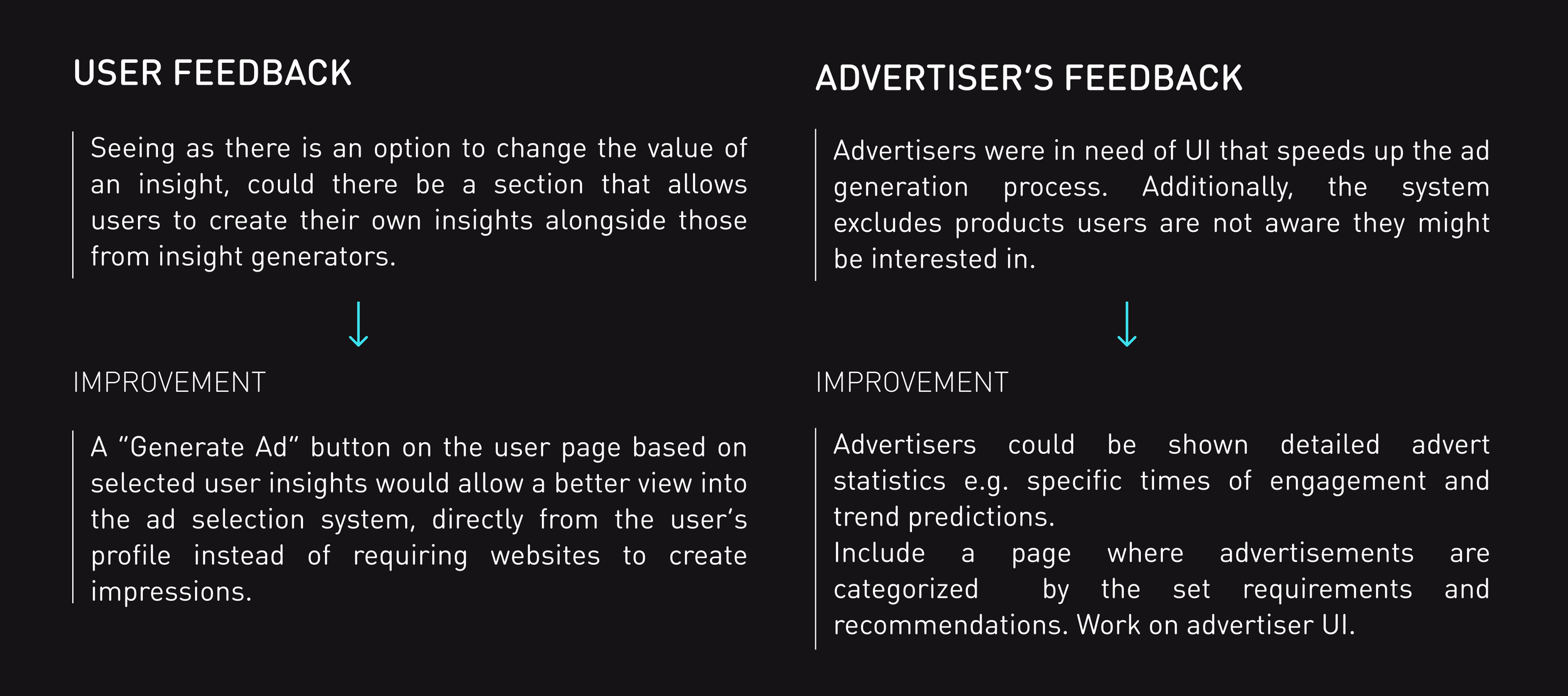
Key Takeaways & Conclusions
ECONOMIC VIABILITY
The core concept of Privately Promoted lies in the design of the system, instead of directly competing with existing browsers. As Privately Promoted was designed to be responsible of transferring data in their servers (audited and verified to be trustworthy), the company requires profit to keep the system running sustainably. This can be implemented in several ways including:
Being paid by publishers and advertisers in need of advertising aggregators in the new future scope to help them run ads.
Being commissioned or paid by governments to act as the national advertising aggregator. This may raise issues in whether governments have too much control in the company, but the system is designed such that data in servers cannot be used maliciously, and it will always be audited for safety.
To continue to grow and remain competitive, Privately Promoted could leverage their unique resources to provide additional services that empower users in their data management.
OVERCOMING GAPS IN THE SYSTEM
When designing a system that requires input from users or other stakeholders, it is important to consider the how it could be misused or abused. So far, only two preventative measures have been included:
Charging advertisers (and rewarding users) for impressions instead of clicks or actions. This is due to a user’s potential to automatically and falsely affect their own revenue by repeatedly clicking on ads.
Insight generators would falsify insights and generate random ones to ensure always getting selected. This is limited by the 100 points allocation method that relates to the confidence of each insight.
Other sources of abuse exist in the system and must be designed against before bringing Privately Promoted to market.